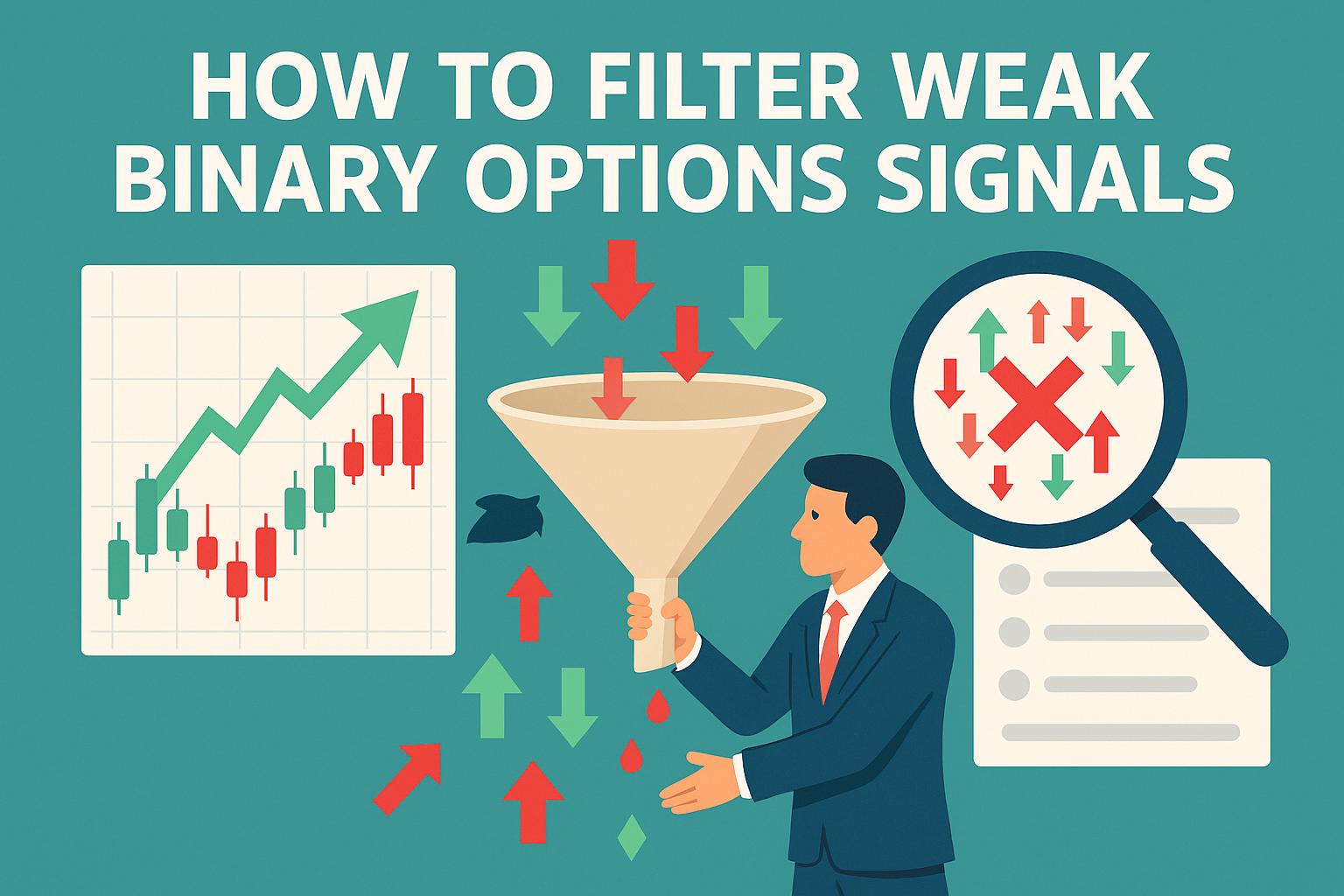
how to filter weak binary options signals
Understanding Binary Options Signals
Binary options signals are essential tools for traders as they serve as alerts or notifications to assist in making buy or sell decisions. These signals are generally rooted in various analytical methods, including technical indicators, news events, and algorithmic systems. However, not every signal holds the same weight, and recognizing and filtering weaker signals is crucial for a successful trading strategy. A systematic approach to understanding and utilizing these signals can greatly enhance trading effectiveness.
Identifying the Source of the Signal
One of the primary steps in utilizing binary options signals is identifying and evaluating the source from which these signals originate. Analyzing the credibility of the signal provider is crucial. Reputable providers usually have a verifiable track record, transparent methods for signal generation, and detailed explanations of their strategies. The credibility of a provider can often be validated through third-party verified results, offering reassurance of the signal’s authenticity. When considering a signal provider, it is essential to seek those who openly communicate their methodologies and strategies, offering transparency in how their signals are generated.
Evaluating Signal Frequency and Timing
The timing and frequency of generated signals often serve as indicators of quality. Signals that are issued too frequently or during odd intervals might be warning signs of unreliability. Trustworthy signals are typically timely and coincide with strategic entry points derived from comprehensive analysis. The goal is to avoid signals that are products of high-frequency emotional trading. Instead, focus on signals rooted in well-considered analysis and timed to align with genuine market opportunities.
Analyzing Success Rates of Historical Performance
Investigating the historical performance success rates of a signal provider is another step in accurate signal evaluation. A robust signal provider will usually offer access to historical data, allowing prospective users to analyze past performance. Exercise caution with providers presenting unrealistically high success rates, as these may not accurately reflect all market conditions, potentially relying on cherry-picked data to present an overly positive image. Realistically, signals should accommodate the unpredictable nature of market fluctuations and reflect varied market conditions.
Technical Indicators and Tools
The use of technical indicators plays an invaluable role in assessing signal strength. Signals that align with common technical indicator insights offer more reliability. Commonly-used technical indicators, such as moving averages, the Relative Strength Index (RSI), and Bollinger Bands, serve as corroborative tools for signal validation. Establishing alignment between these indicators and the signals received increases the likelihood of acting on valid recommendations, thus enhancing decision-making reliability.
Combining Multiple Indicators
Employing multiple technical indicators can enhance verification accuracy by cross-referencing signals with several analytical angles. However, caution is advised to avoid over-complicating the verification process, which can lead to analysis paralysis. The key is to strike a balance that avoids an overwhelming complexity, instead focusing on a coherent and streamlined approach using a reasonable number of indicators, thereby minimizing the risk of conflicting signals.
Evaluate Real-Time Market Conditions
Considering real-time market conditions is imperative, as signals disregarding these may become unreliable. Market dynamics, influenced by factors such as political events, economic data releases, or sudden market volatility, can drastically alter signals generated under normal circumstances. Therefore, cross-checking signals with concurrent news and prevailing market sentiment is essential. This synchronization ensures that signals are situated within contextually appropriate frameworks, maintaining their reliability.
Manual Verification with Expert Analysis
Beyond automated filters, manual verification of signals adds another layer of validation. Engaging expert analysis or consulting experts’ perspectives can add invaluable insights, confirming the reliability of signals. Online platforms and trading communities serve as resources for additional perspectives, though it’s crucial to evaluate their credibility. Peer discussions and expert opinions can refine understanding, bolstering confidence in trading decisions.
Independent Research
Conducting independent research further strengthens the robustness of evaluating trading signals. Accessing various resources, such as financial news platforms like Bloomberg, or utilizing economic calendars, can provide comprehensive perspectives. This additional research layer aids in verifying and reinforcing signal validity, ensuring a well-rounded consideration of factors influencing trading decisions.
In summary, the process of filtering out weak binary options signals involves a multifaceted approach. The journey begins with evaluating credible signal sources, leveraging technical indicators, and recognizing that only signals with contextually accurate, time-sensitive assurances should be acted upon. Continual education through independent research and expert engagement are pivotal components for any trader aiming to enhance their decision-making and achieve success in binary options trading. A refined approach to understanding and analyzing signals ensures traders can make informed, robust decisions aligned with market realities.
This article was last updated on: September 5, 2026
Understanding Binary Options Signals Binary options signals are essential tools for traders as they serve as alerts or notifications to assist in making buy or sell decisions. These signals are generally rooted in various analytical methods, including technical indicators, news events, and algorithmic systems. However, not every signal holds the same weight, and recognizing and…